How Much Protein Do You Actually Need?
Protein has become one of the most talked-about nutrients today. From gym-goers to working professionals, everyone seems to be increasing their protein intake. But one question still confuses many people:
“How much protein does the body actually need?”
The truth is, protein requirements are not the same for everyone. Your age, lifestyle, activity level, and health goals all play an important role.
As a dietitian, one of the most common mistakes I notice is that people either eat too little protein without realizing it or depend too heavily on supplements while ignoring balanced nutrition.
Let’s understand what science actually says about protein needs.
Why Is Protein Important?
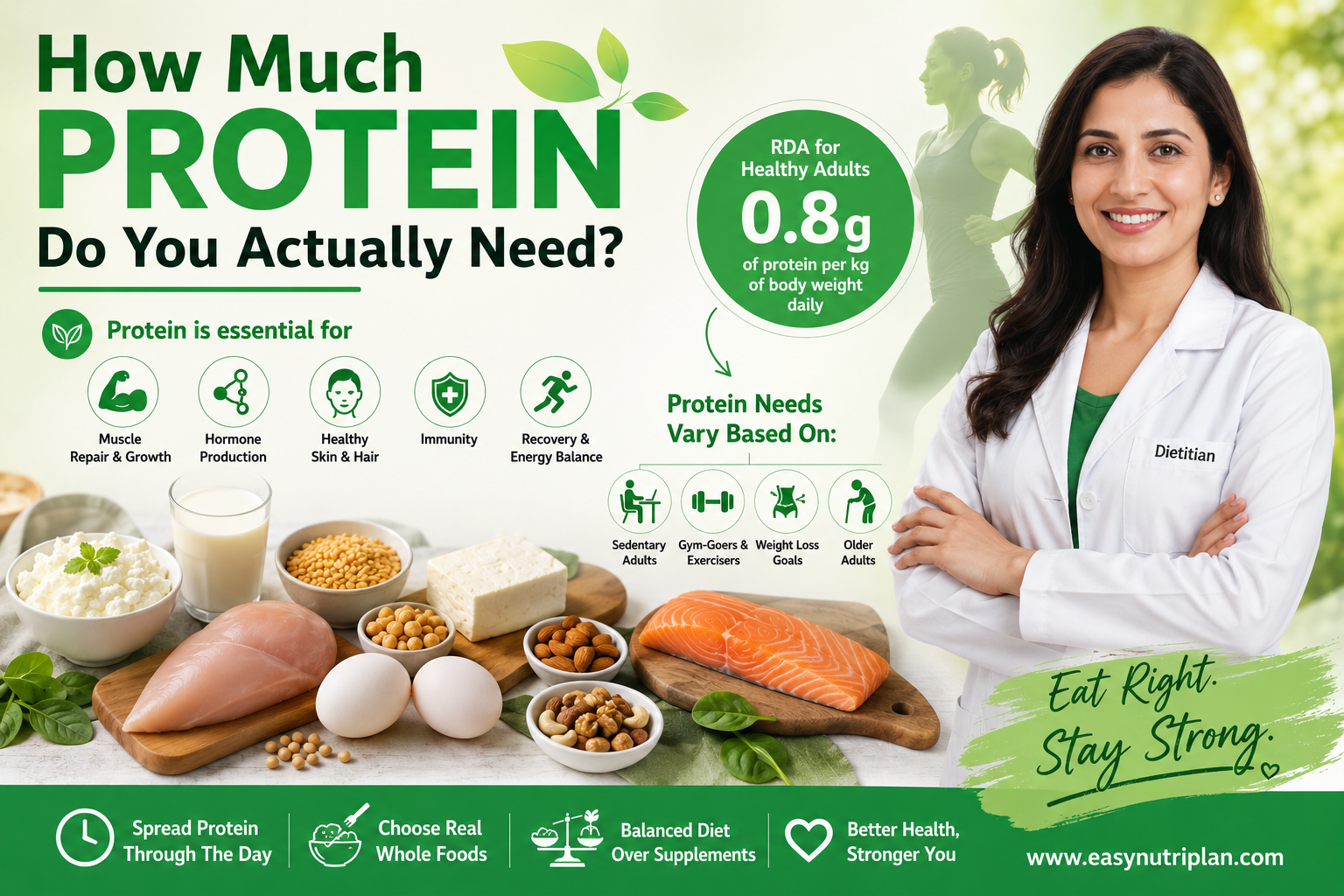
Protein is made up of amino acids, which are essential for:
- muscle repair and growth
- hormone production
- healthy skin and hair
- immunity
- recovery and energy balance
Every cell in the body needs protein to function properly.
Unlike carbohydrates and fats, the body does not store protein efficiently. That is why regular intake through meals becomes important.
What Research Says About Daily Protein Needs
According to the Recommended Dietary Allowance (RDA), a healthy adult needs:
0.8 grams of protein per kilogram of body weight daily
This recommendation is designed to prevent deficiency in the average sedentary adult.
For example:
- A person weighing 60 kg needs around 48 grams of protein daily
- A person weighing 70 kg needs around 56 grams daily
However, modern research suggests that many people, especially active individuals, may benefit from slightly higher intake.
Studies published in journals like The American Journal of Clinical Nutrition show that higher protein intake can support:
- better muscle maintenance
- improved satiety
- healthy aging
- weight management
Protein Needs Based on Lifestyle
- Sedentary Adults
If you have minimal physical activity:
0.8–1 gram/kg body weight is generally sufficient.
Example:
A 65 kg person may require around 52–65 grams daily.
- Regular Exercisers & Gym-Goers
People involved in:
- strength training
- running
- sports
- regular workouts
usually need:
1.2–2 grams/kg body weight
This supports muscle recovery and performance.
- Weight Loss Diets
During fat loss, slightly higher protein intake helps preserve muscle while reducing hunger.
Research shows protein-rich diets may improve satiety and reduce cravings.
Recommended range:
1.2–1.6 grams/kg body weight
- Older Adults
As we age, muscle loss naturally increases.
Experts now recommend higher protein intake for older adults to support:
- muscle strength
- bone health
- mobility
Signs You May Not Be Eating Enough Protein
Low protein intake may lead to:
- constant hunger
- low energy
- hair fall
- weak nails
- slow recovery
- muscle weakness
- poor concentration
In India especially, many meals are heavily carbohydrate-based, while protein intake remains low.
Do You Need Protein Supplements?
Not always.
Most people can meet their protein needs through regular foods like:
- dal
- paneer
- curd
- milk
- eggs
- fish
- chicken
- soy products
- nuts and seeds
Protein powders can be useful for convenience, especially for athletes or busy individuals, but they should not replace balanced meals.
Best Way to Consume Protein
One important fact many people overlook:
Protein absorption works best when intake is spread throughout the day.
Instead of eating most protein at dinner, include protein in:
- breakfast
- lunch
- snacks
- dinner
This helps maintain energy, muscle repair, and appetite control more effectively.
Final Thoughts
Protein is not just for bodybuilders.
It is an essential nutrient that supports overall health, strength, recovery, and long-term wellness. While deficiency is common, more protein is not always better either.
The goal should be:
adequate, balanced, and sustainable protein intake based on your lifestyle and health needs.
A simple, well-balanced diet with good-quality protein sources is often enough to support a healthy body and active life.
📅 Book Your Consultation Today
🌐 Visit: https://easynutriplan.com/